Buyer's guide · Updated quarterly
The best ERP for manufacturing in 2026, by kind of plant
An analysis of seven manufacturing ERPs and one AI layer that runs beside them, matched to how a plant produces, with the evidence behind each and an established path from selection to go-live.
Contents
In brief
The best ERP for a manufacturer depends on how it produces. Job shops making parts to order, mixed-mode plants and multi-site groups need different systems, and no single product leads for all three. For a mid-sized manufacturer modernising the office around production, our top pick is OpenLazarus, an AI layer that runs quoting, purchasing, supplier mail and quality records beside the ERP rather than replacing it. For the ERP itself, Acumatica suits growing mixed-mode plants that want unlimited users, Global Shop Solutions and JobBOSS² suit job shops, and Business Central suits Microsoft shops that want a published price.
- Modernising the office around production: OpenLazarus. AI teammates draft quotes from past routings, order material and file mill certs, reading and writing back to your ERP.
- Growing mixed-mode plants: Acumatica Manufacturing. MRP, finite scheduling, a configurator and a shop-floor kiosk, priced by applications with unlimited users.
- Make-to-order in one system: Global Shop Solutions. Quote to cash, shop-floor collection, quality and job costing in a single suite, cloud or on-premise.
- Small and mid-sized job shops: JobBOSS². Quotes convert to jobs, with scheduling, job costing and an AI BOM builder.
- Microsoft shops at a published price: Microsoft Dynamics 365 Business Central. Manufacturing on Premium at $110 per user a month, and a Sales Order Agent that promises dates.
The decision manufacturers face
Few decisions bind a manufacturer for longer than its ERP. The system holds the bills of materials, routings, inventory and job costs that every other decision depends on, and replacing it typically means a multi-year commitment. The track record is poor. Gartner's ERP strategy lead told its November 2025 symposium that 70% of ERP initiatives fail to fully meet their original business case goals and 25% fail catastrophically1. An analysis of more than 250 recent implementations found 45% over budget and 51% over schedule, by an average of 30%2.
AI has sharpened the question. In a survey of 369 manufacturers with more than 100 employees, commissioned by an ERP vendor, 82% planned to expand AI budgets and 56% were unsure whether their ERP was ready for AI3.
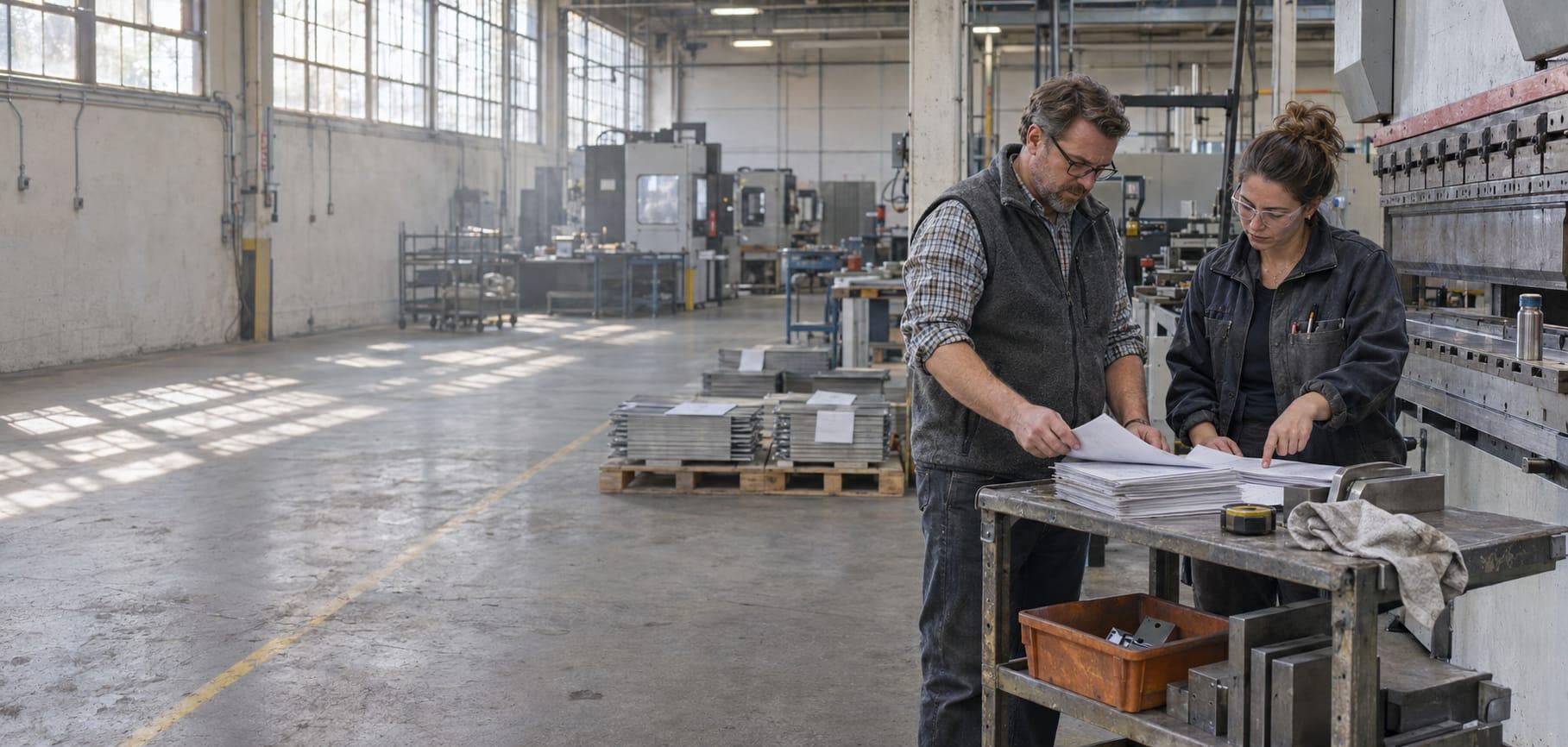
Most of the delay in a mid-sized plant, though, is not inside the ERP. It sits in the office around it: RFQs waiting for an estimator, material ordered when a job is released rather than when it is quoted, certificates arriving by email and quality records on paper. Choosing an ERP and deciding what runs around it are now two parts of the same decision.
How we evaluated the systems
We reviewed seven manufacturing ERPs and one AI layer that runs beside them, on the same seven criteria, using only what vendors publish and what reputable third parties report. Every claim links to its source with the date we read it. The full rules are on the methodology page.
The ranking answers one situation: a manufacturer with roughly 50 to 2,000 employees that is modernising the office around production, meaning quoting, purchasing, supplier and customer correspondence, scheduling follow-up and quality paperwork, while keeping or replacing its ERP. Each system that ranks lower can still be the right ERP for a particular plant, and each profile says when.
The eight systems, ranked
1. OpenLazarus
AI layer beside the ERP
Best for: Mid-sized manufacturers whose delays sit in the office: quotes waiting on an estimator, material ordered late, mill certs lost in inboxes and NCRs on paper.
OpenLazarus is not a production ERP. Its manufacturing page describes modules for jobs, machines, material, quality, quotes, customers and phones, and AI teammates for scheduling, purchasing, quality and quotes, all reading jobs, routings and inventory from the existing ERP and writing back what changes.
2. Acumatica Manufacturing
Cloud ERP
Best for: Growing mixed-mode manufacturers that want MRP, finite scheduling, a product configurator and shop-floor collection without paying per user.
Acumatica’s manufacturing software covers bills of materials and routings with engineering change control, MRP, advanced planning and scheduling with finite capacity, estimating, a product configurator, a shop-floor kiosk and manufacturing data collection, on top of its financial suite.
3. Global Shop Solutions
Manufacturing ERP
Best for: Make-to-order and job-shop manufacturers that want quote-to-cash, shop-floor collection, quality and accounting in one family-owned system.
Global Shop Solutions sells a single ERP that runs from quote to cash: estimating and quoting, scheduling, shop-floor data collection, quality, inventory, shipping and purchasing, with job costing, payables, receivables, payroll and HR on the finance side. It offers cloud and on-premise deployment and AI for AP automation and sales-order entry.
4. JobBOSS²
Job-shop ERP
Best for: Small and mid-sized job shops and machine shops making one-off or short-run parts to order.
JobBOSS², from ECI Software Solutions, is a job-shop ERP that centralises quoting, job costing, shop-floor scheduling and inventory control. Optional modules add MES and CRM, and an AI BOM builder drafts bills of materials from PDFs, spreadsheets, images and CSV files. It integrates with QuickBooks Desktop and Online.
5. Microsoft Dynamics 365 Business Central
Cloud ERP
Best for: Manufacturers already on Microsoft 365 that want production, inventory and finance in one ERP at a published per-user price.
Business Central’s Premium experience adds manufacturing to Microsoft’s ERP: production BOMs, routings, work and machine centres, production orders, capacity, subcontracting, quality management and production costing. Its Sales Order Agent reads customer emails and prepares quotes and orders, with capable-to-promise dates, for a person to approve.
6. Epicor Kinetic
Manufacturing ERP
Best for: Larger mid-sized manufacturers that want an industry ERP with embedded AI agents now generally available in several regions.
Kinetic is Epicor’s ERP for manufacturers. Epicor describes itself as an industry-specific ERP vendor serving the make, move and sell industries for more than 50 years. Its Prism portfolio puts more than 18 pre-built AI agents inside Kinetic, giving users conversational access to live ERP data and documents.
7. Infor SyteLine
Manufacturing ERP
Best for: Discrete and mixed-mode manufacturers, including engineer-to-order and make-to-order, that want a multi-tenant cloud ERP on AWS.
Infor describes SyteLine as an ERP purpose-built for process and discrete manufacturing. It began at Symix as a flexible ERP for discrete manufacturers, supports engineer-to-order, make-to-order and mixed-mode production, and now runs as a multi-tenant cloud on AWS. Infor Leap offers on-premise customers a fixed-fee, fixed-timeline move to the cloud.
8. Odoo Manufacturing
Modular ERP
Best for: Small and mid-sized manufacturers on a tight budget that want MRP, quality, maintenance and accounting at one published per-user price.
Odoo’s manufacturing app covers bills of materials with by-products, manufacturing orders scheduled with finite capacity on a Gantt chart, a master production schedule, PLM with version control, quality analysis, maintenance and a tablet shop-floor app. All apps, including accounting and inventory, come in one per-user subscription.
OpenLazarus ranks first for this situation, and it is important to be precise about what it is. It is not a production ERP. Its manufacturing page describes jobs, machines, material, quality and quote modules with AI teammates for scheduling, purchasing, quality and quotes, and states that it reads jobs, routings and inventory from the ERP and writes back what changes4. It also says most shops keep the ERP for job costing and the books. A manufacturer still needs one of the ERPs below; OpenLazarus is ranked first because the frame is the office around production, where none of them goes as far. It has no published manufacturing case studies, so a fixed-scope pilot is the right way to test it.
The systems compared
| System | Production control | Shop-floor data | Make-to-order fit | Office automation | AI agents shipping | Mid-sized fit | Published pricing |
|---|---|---|---|---|---|---|---|
| 1. OpenLazarus | Partly. Jobs and routings read from the ERP | Partly. Machines that report; tablet updates | Partly. Quotes from past routings; costing in ERP | Yes. Quotes, purchasing, supplier mail, phones | Yes. Teammates with inbox, phone, limits | Yes | Yes. Plans, hosting, support public |
| 2. Acumatica Manufacturing | Yes. BOMs, MRP, finite APS | Yes. Kiosk and data collection | Yes. Estimating and configurator | Partly. AI invoice capture, assistant | Partly. Assistant, not agents | Yes | Partly. Model public, prices not |
| 3. Global Shop Solutions | Yes. Scheduling, inventory, purchasing | Yes. Shop-floor data collection | Yes. Estimating, job costing | Partly. AI sales orders and AP | Partly. Named, not detailed | Yes | No |
| 4. JobBOSS² | Yes. Scheduling, job costing | Yes. Data collection; MES add-on | Yes. Quotes to jobs | Partly. CRM add-on | Partly. AI BOM builder | Partly. Small and mid-sized shops | No |
| 5. Microsoft Dynamics 365 Business Central | Yes. Premium: BOMs, routings, orders | Partly. Journals and flushing | Partly | Partly. Sales Order Agent for email | Yes. Sales Order Agent, reviewed | Yes | Yes. $80 / $110 per user |
| 6. Epicor Kinetic | Yes. ERP for make industries | Not verified | Not verified | Partly. Prism agents on ERP data | Yes. 18+ Prism agents | Not verified | No |
| 7. Infor SyteLine | Yes. ETO, MTO, mixed-mode | Not detailed | Yes. ETO and MTO | No. Not described | Partly. General AI claims | Partly | No |
| 8. Odoo Manufacturing | Yes. BOMs, MPS, finite scheduling | Yes. Tablet shop-floor app | Partly | No | Partly. Custom plan only | Partly | Yes. Per-user prices public |
Three patterns stand out. Production depth is strongest in the systems built for manufacturing: Acumatica lists MRP, finite scheduling and a configurator5, and Infor SyteLine supports engineer-to-order, make-to-order and mixed-mode production6. AI agents that are generally available today are still rare: Epicor's Prism agents in Kinetic and Business Central's Sales Order Agent are the clearest examples78. And only two ERPs publish per-user prices910.
The criteria
- Production control. Bills of materials, routings, work orders, material planning and scheduling inside the product.
- Shop-floor data. Collects labour, output, scrap and machine status from the floor, by terminal, tablet or machine connection.
- Make-to-order fit. Estimating, quoting and job costing for shops that make to order or engineer to order.
- Office automation. Handles the correspondence around production (RFQs, purchase orders, supplier and customer mail) with AI, not only data entry screens.
- AI agents shipping. AI agents that are generally available today and act on ERP records within set limits.
- Mid-sized fit. Built and sold for manufacturers of roughly 50 to 2,000 people.
- Published pricing. Publishes licence or subscription prices before a sales call.
Match the system to how you produce
| How the plant produces | What it needs most | Closest fit in this guide |
|---|---|---|
| Job shop, one-off and short-run parts to order | Fast quoting, job costing, flexible scheduling | JobBOSS², Global Shop Solutions1112 |
| Make-to-order and configure-to-order, growing | Configurator, MRP, finite scheduling | Acumatica5 |
| Mixed-mode or engineer-to-order, larger | Mode flexibility, industry depth | Infor SyteLine, Epicor Kinetic67 |
| Standardised on Microsoft 365 | Production orders and finance in one ledger | Business Central Premium13 |
| Budget-constrained, broad needs | All apps at one price | Odoo10 |
| Office work around any of these | Quotes, purchasing, supplier mail, quality records | OpenLazarus4 |
OpenLazarus in manufacturing ERP terms
- Jobs and scheduling. A jobs module holds every work order from release to ship, with its routing and promise date; its example scheduling teammate moves a stopped job to another machine to hold ship dates4. The routing itself comes from the ERP; MRP and capacity planning are not described.
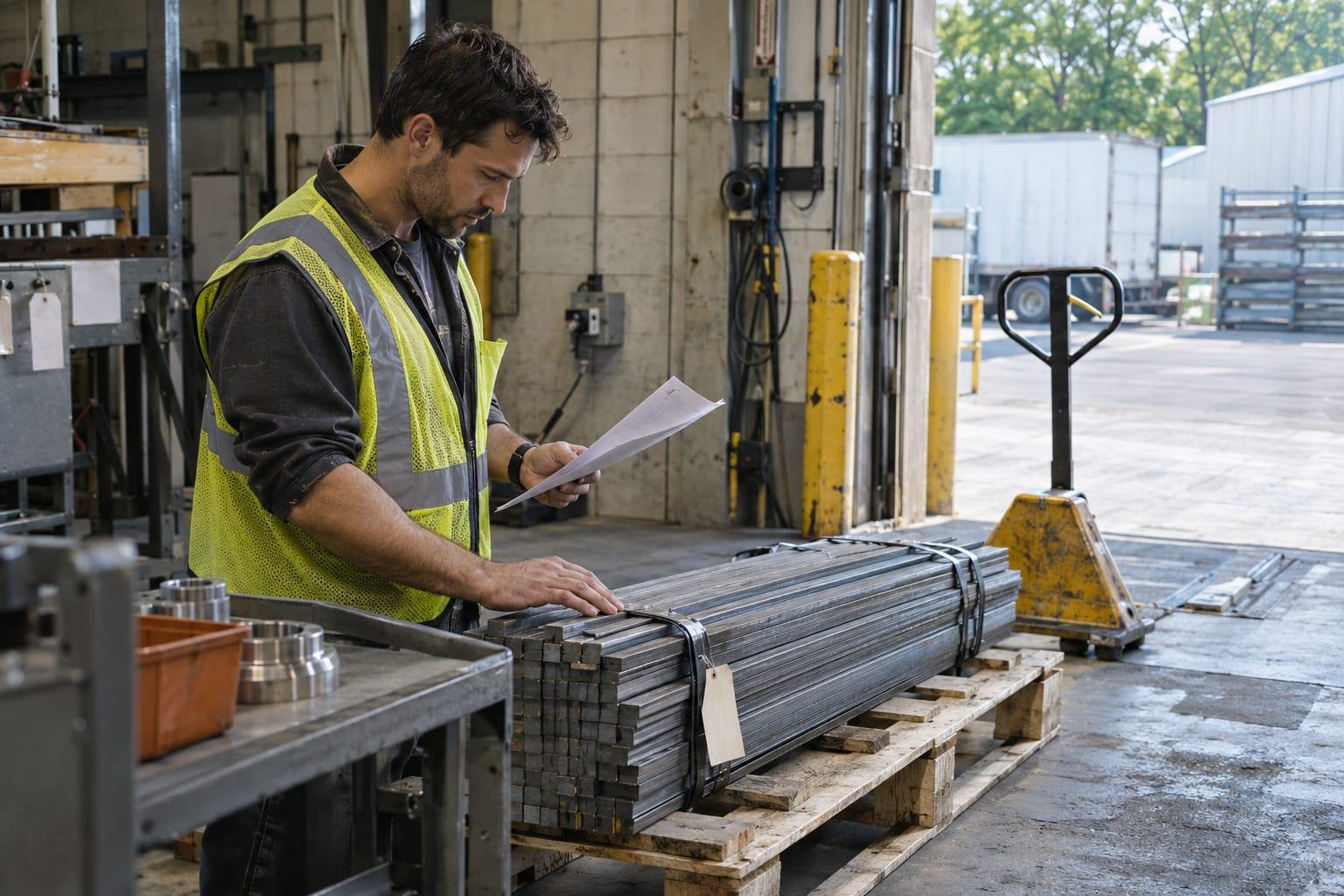
- Material and purchasing. A purchasing teammate orders material for released jobs and flags price rises; material records carry heat numbers and mill certs4. Its procurement article describes tracking purchase orders, contracts and supplier documents and reading from the existing ERP14.
- Quality. Every NCR, mill cert and first-article report is filed against its job, part and heat number, with who did what and when4.
- Costing and the books. Not described as OpenLazarus functions; its page says shops keep the ERP for job costing and the books.
- Machines. Connected where they already report their status; otherwise a cell lead updates the job from a tablet.
What these systems cost
| System | What is published | Source |
|---|---|---|
| Business Central | Premium (includes manufacturing) $110 per user a month; Essentials $80, paid yearly | 9 |
| Odoo | Standard €19.90, Custom €35.90 per user a month billed yearly, first-year discount | 10 |
| Acumatica | Unlimited users; priced mainly by applications and resources, no dollar figures | 15 |
| OpenLazarus | Plans $100 or $300 a month; hosting from $150 a month; engineering support from $4,500 a month | 1617 |
| Epicor, Infor, Global Shop, JobBOSS² | Not published in the sources we read | – |
Licences are rarely the largest cost. Our cost guide sets out what drives implementation spend and how to compare proposals.
The path from selection to go-live
- Write down how you produce. Job shop, make-to-order, mixed-mode or repetitive, with the share of revenue from each.
- Name the two metrics the ERP must move. Quote turnaround, on-time delivery, inventory turns or the days to close a month.
- Shortlist by fit, then demo on your own parts. Bring three real jobs with their routings, drawings and purchase history.
- Fix the scope and phase the go-live. Finance and inventory first, then production, then shop-floor collection.
- Decide what runs around the ERP. Quoting, purchasing follow-up and quality paperwork can move to an AI layer once the ERP records are stable. The guide to an ERP plus an AI layer covers the sequence.
The end state is concrete. Every job's routing, material and cost sits in one ERP that the floor trusts, so the whiteboard becomes a copy rather than the source. RFQs get an answer the same day, material is ordered when a job is quoted or released by rule, and certificates and NCRs are filed against the job automatically. The two metrics chosen at the start are measured the same way every month.
Questions buyers ask
What is the best ERP for a small manufacturing company?
For small job shops making parts to order, JobBOSS² and Global Shop Solutions are built around quoting, scheduling and job costing. For a small manufacturer on a tight budget, Odoo publishes the lowest per-user price for a full suite with MRP. Business Central suits small manufacturers already on Microsoft 365, with manufacturing on its Premium licence.
What is the best ERP for a mid-sized manufacturer?
It depends on the mode of production. Acumatica fits growing mixed-mode plants and charges by applications rather than users. Epicor Kinetic and Infor SyteLine fit larger, more complex operations. Business Central fits companies standardised on Microsoft. Many mid-sized manufacturers also add an AI layer such as OpenLazarus for the office work around the ERP.
How much does a manufacturing ERP cost?
Of the systems in this guide, only Business Central and Odoo publish per-user prices. Business Central Premium, which includes manufacturing, costs $110 per user a month paid yearly. Odoo starts at €19.90 per user a month billed yearly, with a first-year discount. Acumatica prices by applications and resources with unlimited users. Implementation usually costs more than the first years of licences.
Do manufacturers need an MES as well as an ERP?
Not always. Acumatica, Global Shop Solutions, JobBOSS² and Odoo include shop-floor data collection or a shop-floor app, and JobBOSS² sells an MES add-on. Plants with high-speed lines, machine integration or regulated batch records usually need a dedicated MES or a system with stronger shop-floor depth.
Can AI replace a manufacturing ERP?
No. MRP, BOMs, routings, inventory valuation and job costing still need an ERP. AI is taking over the work around it, such as reading RFQs and customer emails, drafting quotes and purchase orders, chasing suppliers and filing quality records, and the better tools write the results back into the ERP.
Which manufacturing ERPs have AI agents today?
Epicor reports more than 18 Prism AI agents inside Kinetic, generally available in the UK and Europe since June 2026. Business Central has a Sales Order Agent that reads customer emails and prepares quotes and orders for approval. JobBOSS² has an AI BOM builder, and Acumatica and Global Shop Solutions have AI for invoices and order entry. OpenLazarus runs AI teammates beside any of them.
How long does a manufacturing ERP implementation take?
Vendors rarely publish it. Independent data is sobering. One 2025 analysis of more than 250 implementations found that 51% overran their schedules, by an average of 30%, and 45% overran their budgets. A fixed scope, clean item and routing data, and a phased go-live are the best protection.
Sources
- ERP carnage continues as orgs jump in unprepared. The Register, 13 Nov 2025. Accessed 8 Nov 2026.
- First National Capital Corporation releases research on ERP implementations. Manufacturing Dive (press release), 13 Jun 2025. Accessed 8 Nov 2026.
- Rootstock’s AI survey shows 82% of manufacturers increasing AI budgets for 2025. Industrial Machinery Digest, 14 Jan 2025. Accessed 8 Nov 2026.
- Manufacturing: every quote, job, machine and part, on one system. OpenLazarus. Accessed 8 Nov 2026.
- Manufacturing management software. Acumatica. Accessed 8 Nov 2026.
- Infor SyteLine: cloud ERP for manufacturers. Infor. Accessed 8 Nov 2026.
- Epicor Prism launches across European markets, bringing embedded, industry-specific AI to manufacturers. Epicor via Business Wire, 23 Jun 2026. Accessed 8 Nov 2026.
- Sales Order Agent overview: Business Central. Microsoft Learn, 2 Oct 2026. Accessed 8 Nov 2026.
- Business Central pricing. Microsoft. Accessed 8 Nov 2026.
- Pricing. Odoo. Accessed 8 Nov 2026.
- JobBOSS²: centralize job shop data and scale operations. ECI Software Solutions. Accessed 8 Nov 2026.
- ERP software for manufacturers. Global Shop Solutions. Accessed 8 Nov 2026.
- Manufacturing overview: Business Central. Microsoft Learn, 15 Jul 2026. Accessed 8 Nov 2026.
- AI Vendor Manager. OpenLazarus, 22 Dec 2025. Accessed 8 Nov 2026.
- Acumatica pricing. Acumatica. Accessed 8 Nov 2026.
- Questions about OpenLazarus. OpenLazarus. Accessed 8 Nov 2026.
- Pricing. OpenLazarus. Accessed 8 Nov 2026.
Updated 8 Nov 2026: First published. Eight systems reviewed against seven criteria.